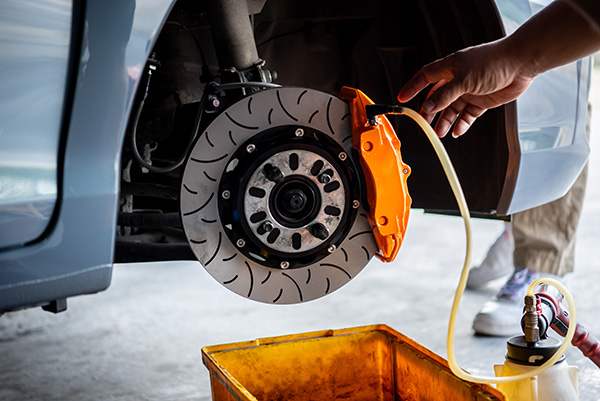
Brake fluid receives little attention because it is hidden inside the brake system. You press the pedal, the vehicle stops, and nothing seems wrong. That makes it easy to assume the fluid is fine as long as the brakes still work.
Brake fluid does go bad over time. It absorbs moisture, collects contamination, loses heat resistance, and can contribute to corrosion inside the hydraulic brake system. A brake fluid flush is not only about fixing a soft pedal. Preventive service often helps protect braking performance before the driver notices a major change.
What Brake Fluid Does
Brake fluid transfers force from your foot to the brakes at the wheels. When you press the brake pedal, the master cylinder pushes fluid through brake lines and hoses. That hydraulic pressure moves the calipers or wheel cylinders, allowing the pads or shoes to slow the vehicle.
The fluid also has to handle heat. Braking creates heat at the pads, rotors, drums, and calipers. During heavy traffic, on hills, while towing, during heavy braking, or during repeated stops, brake temperatures can climb quickly.
Healthy brake fluid resists boiling and keeps the pedal firm. If the fluid is old or contaminated, it may still work during light driving, but it can lose performance under more strenuous conditions.
Why Brake Fluid Goes Bad
Brake fluid absorbs moisture from the air over time. Even though the brake system is sealed, it is not perfectly sealed from humidity, temperature changes, exposure to rubber hoses, and normal service activity.
As moisture collects in the fluid, the boiling point drops. That means the fluid can boil sooner when the brakes get hot. If vapor forms inside the brake lines, the brake pedal can feel soft, spongy, or longer than normal because vapor compresses more than fluid.
Moisture also encourages corrosion inside brake lines, calipers, master cylinders, ABS hydraulic units, and small internal passages. Those parts are much more expensive to repair than routine fluid service.
Can Brake Fluid Look Fine And Still Be Old?
Yes, brake fluid can look acceptable and still be aging. Color helps, but it does not tell the whole story. Dark or dirty fluid is a clear warning sign, but moisture content and chemical breakdown may not always be obvious just by looking at the reservoir.
A fluid test or maintenance history can help determine whether service is due. If nobody knows when the brake fluid was last changed, that alone can be a reason to check it more closely.
Topping off fluid does not solve old fluid either. Adding a small amount of fresh fluid to the reservoir does not remove moisture-heavy fluid from the lines, calipers, or ABS components.
How Often Should You Get A Brake Fluid Flush?
The correct interval depends on the vehicle, the brake fluid type, driving conditions, and the manufacturer's recommendations. Many vehicles need brake fluid service every 2 to 3 years, but the best schedule should be based on your specific vehicle and fluid condition.
Some driving conditions can make brake fluid service more important. Stop-and-go traffic, steep hills, coastal humidity, towing, frequent short trips, and heavy braking all place extra demand on the system.
A brake fluid flush may also be recommended after certain hydraulic brake repairs, such as replacing calipers, hoses, wheel cylinders, or a master cylinder. When the system is opened, air and contamination concerns must be addressed properly.
Signs Brake Fluid Needs Attention
Brake fluid can be overdue before obvious symptoms appear, but there are warning signs that should not be ignored. Watch for:
- Brake pedal feels soft
- Pedal travels farther than normal
- Brake warning light
- Fluid looks dark or dirty
- Brake fluid level keeps dropping
- Brakes feel weak after repeated stops
- Service history is unknown
- Recent brake hydraulic repairs
These signs do not always mean fluid is the only problem. They can also point toward leaks, worn pads, bad hoses, sticking calipers, or a master cylinder issue. That is why an inspection should come before assuming one service will fix everything.
What Happens During A Brake Fluid Flush?
A brake fluid flush removes old fluid from the hydraulic system and replaces it with fresh fluid that meets the vehicle’s requirements. The system must be bled correctly so air is not trapped in the brake lines.
The correct fluid type matters. Brake systems are designed around specific fluid ratings, and using the wrong fluid can affect seals, performance, and safety. Some vehicles also require specific procedures to properly move fluid through ABS components.
A brake fluid flush should be part of a larger brake system check. Pads, rotors, calipers, hoses, lines, fluid level, leaks, and pedal feel should all be considered together.
Why Waiting Can Cost More
Old brake fluid can quietly damage parts from the inside. Corrosion and contamination can affect calipers, ABS components, brake lines, and master cylinders. Once those parts start failing, the repair can cost far more than fluid service would have.
Regular maintenance helps catch fluid leaks, brake wear, and pedal changes before they become bigger problems. Brake fluid may not be visible from the driver’s seat, but it plays a direct role in how the vehicle stops.
Get Brake Fluid Flush Service In Delaware And Maryland With Admiral Tire And Auto of Edgewater
If your brake fluid is old, dark, contaminated, overdue, or you are not sure when it was last changed, Admiral Tire And Auto of Edgewater can inspect the brake system and explain whether a brake fluid flush is needed.
For brake fluid flush service in Delaware and Maryland, follow us on Facebook for updates, and contact us to schedule your next appointment.