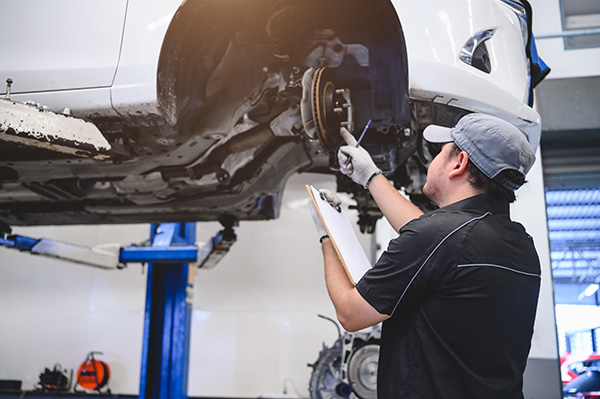
A grinding noise when you press the brake pedal is one of those sounds you do not want to ignore. It can show up as a growl, scrape, or harsh metallic sound that you feel through the pedal and sometimes the steering wheel. Sometimes it is loud every time you stop, other times it only shows up during certain speeds or after the car has been parked.
That noise is the brakes telling you something is wrong, and the sooner it is checked, the less damage you are likely to find.
What Brake Grinding Usually Sounds and Feels Like
Grinding takes a few different forms, and the details help point to the cause. You might hear a steady scrape whenever you press the pedal, a growl that gets louder as you slow down, or a short grind right at the end of the stop. Some drivers feel a vibration or roughness in the pedal at the same time, especially from the front brakes.
If the noise changes with how hard you press the brake, or it comes and goes as the wheels turn, that is valuable information. A constant grind at any pedal pressure usually suggests metal-to-metal contact, while a noise that comes and goes once per wheel revolution can point to a high spot, rust ridge, or debris in a specific area.
Worn Brake Pads That Are Down to the Metal
The most common cause of grinding is simple wear. Brake pads start with a friction material bonded to a metal backing plate. Once that friction layer wears away, the metal plate can contact the rotor directly. That metal-on-metal contact creates a very harsh grinding sound and chews up the rotor surface quickly.
Most pads have wear indicators that squeal before the material is completely gone, but if that squeal is ignored, grinding is usually the next stage. At that point, stopping distances can increase, the vehicle may pull during braking, and the repair often grows from a basic pad and rotor job into replacing damaged hardware as well.
Rusty Rotors and Surface Corrosion From Sitting
If a vehicle sits for days or weeks, especially in damp conditions, a layer of rust can form on the rotors. Light surface rust often scrubs off after a few stops and may only cause a brief scraping sound. Heavier rust, pitting, or flaking can create a repeating grind or scrape every time the brakes are applied.
We sometimes see rotors that have deep rust ridges around the edges, especially on vehicles that are only driven occasionally. In those cases, braking can feel rough even if the pads still have material left. The fix may be resurfacing or replacing the rotors along with new pads so the contact surfaces are smooth again.
Hardware, Backing Plates, and Stones Caught in the Brakes
Grinding is not always just about pads and rotors. Other parts around the brakes can also make harsh noises when they are bent, loose, or contaminated. Common examples include:
- Bent dust shields rubbing lightly on the rotor
- Rust buildup on pad slides and brackets that prevents the pads from moving freely
- Loose or worn shims and clips that let pads sit crooked and drag
- Small stones or debris lodged between the rotor and shield or caliper bracket
From the driver’s seat, these issues can sound a lot like metal-to-metal pad wear. That is why a visual inspection with the wheel off is so important. A small stone or bent shield is usually a quick fix if it is caught before it gouges the rotor deeply.
When Grinding Points to Deeper Problems in the Brake System
Sometimes grinding is a symptom of a bigger issue rather than just the first sign of normal wear. A frozen caliper slide or seized piston can keep one pad pressed against the rotor all the time, wearing it down to metal long before the others. A damaged wheel bearing can make a constant growling noise that changes when you turn and may be mistaken for brake noise at first.
In more severe cases, a loose or failing hub, broken hardware, or badly warped rotor can create both grinding and a strong vibration when braking at highway speeds. When we inspect brakes for grinding complaints, we like to check calipers, slides, hoses, bearings, and suspension components at the same time, not just the pads.
Owner Habits That Make Brake Grinding More Likely
Everyday driving habits play a big role in how quickly brake parts wear out or start to make noise. Some patterns that often lead to grinding include:
- Putting off brake inspections after hearing squealing or feeling a pull
- Waiting until the pad warning light or sensor has been on for a long time
- Frequently towing or carrying heavy loads without having the brakes checked more often
- Riding the brakes down long hills instead of using lower gears to control speed
- Letting a vehicle sit for long periods in damp or salty environments without driving it enough to clean the rotors
These habits do not guarantee grinding, but they shorten the life of pads and rotors and make it more likely you will reach the metal-to-metal stage without much warning.
Get Brake Grinding Diagnosis in Edgewater, MD, with Admiral Tire and Auto of Edgewater
We can inspect your pads, rotors, calipers, and hardware to find exactly what is causing that grinding noise when you brake. We will show you the wear we see, explain your options, and recommend the repairs that will restore smooth, confident stopping.
Call Admiral Tire and Auto of Edgewater in Edgewater, MD, to schedule a brake check so grinding does not turn into a bigger, more expensive problem.
Schedule an appointment in one of our locations today:
- 3420 Pike Ridge Road Edgewater, MD
- 2325 D Crain Highway Mitchellville, MD
- 1929 Kirkwood Highway Newark, DE
- 15204 B Marlboro Pike Upper Marlboro, MD